Sweet Mother's Recovery Journal | Real Talk for Superhero Mothers Getting Their Bodies Back
3 Months After Giving Birth, She Looked in the Mirror and Didn't Recognize Herself. Her Belly Was Still There, Her Energy Was Gone, and Her Confidence Had Vanished. Then She Discovered a Simple 28-Day Plan That Changed Everything — No Gym, No Dieting, No Waist Trainer.
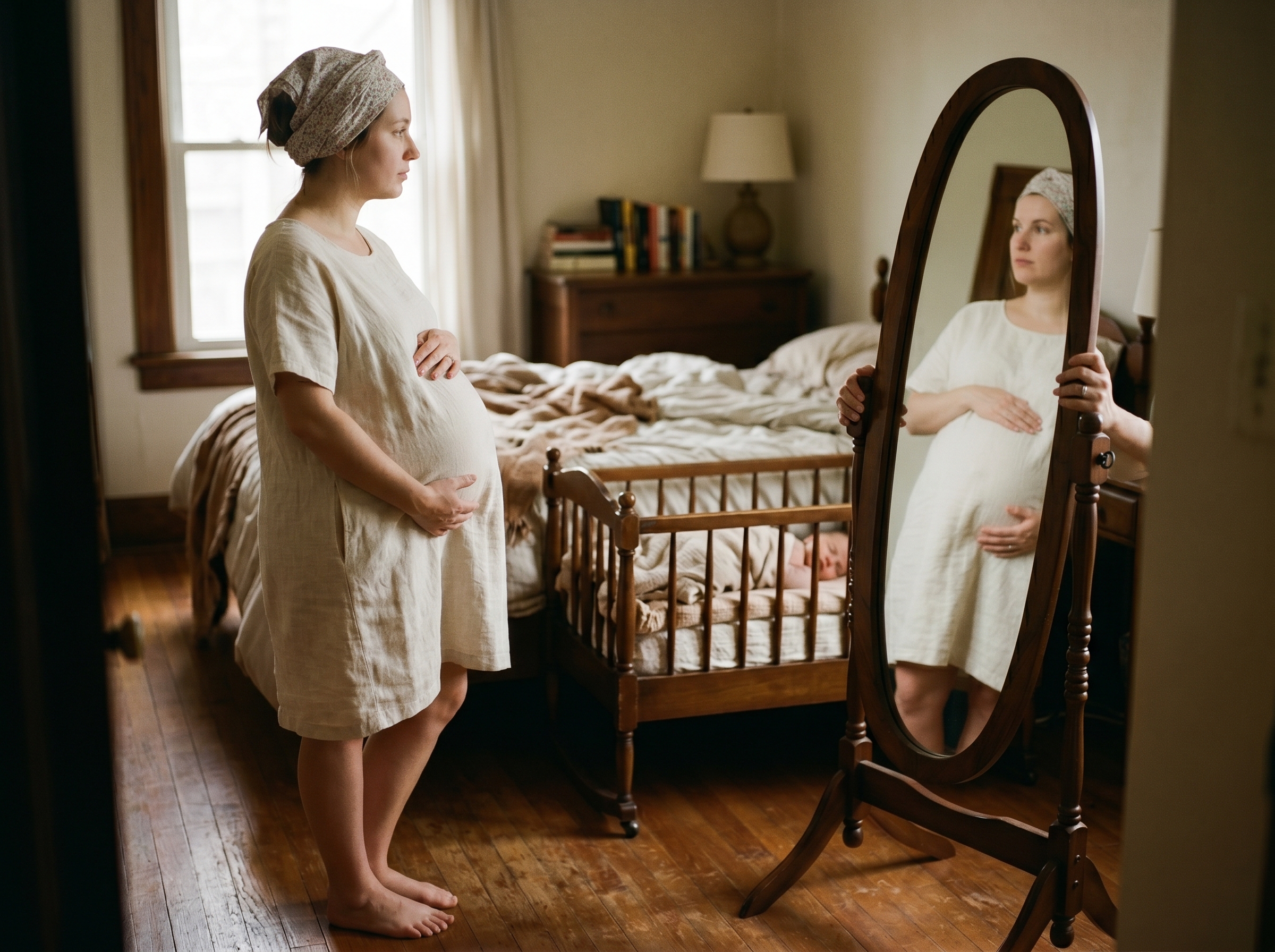
You already know what I'm going to say.
Because you live it every single morning.
You stand in front of that mirror — maybe in the bathroom, maybe in your bedroom — and you look at your stomach.
And it's still there.
The mom pouch.
Soft. Round. Hanging forward. Like your body forgot it already delivered the baby.
You suck it in. It doesn't move. You press on it. It's not hard, it's not bloated — it's just… there.
You try on your pre-pregnancy jeans. They stop at your hips. The zipper doesn't budge.
You grab that dress you used to love — and the waistline won't close.
So you reach for the same oversized top you've been wearing for months. The one that hides everything. The one that makes you feel invisible.
And you tell yourself: "It will go eventually. Just give it time."
But it's been 3 months. Or 5. Or 8. Maybe a year.
And the belly is still there.
So you tried things:
— You bought a waist trainer. Wore it faithfully every day. Your belly went right back to the exact same shape the moment you took it off. All that discomfort for nothing.
— You tried a postpartum diet. Cut the carbs, counted the calories, gave up your favorite foods. Lost weight in your face, arms, and chest — but your belly didn't budge.
— You started walking every morning. 30 minutes. For weeks. Great for your mood. Your belly? Completely unchanged.
— You tried the "flat tummy" supplements and detox teas you saw all over Instagram. Spent real money. They did absolutely nothing.
Nothing works. And you're starting to wonder if this is just your body now.
But it's not just the belly.
You're exhausted. Not "I didn't sleep well" tired — bone-deep tired. The kind where you wake up exhausted. Where getting off the couch feels like a workout. Where you can't remember the last time you had real energy after noon.
Your lower back aches constantly. Your core feels weak and hollow — like nothing is holding your body together from the inside.
You leak a little when you sneeze, cough, or pick up your baby. You've started wearing panty liners and telling yourself it's normal.
You can't carry your baby on one hip without your lower back screaming.
And the confidence? Gone.
You avoid mirrors. You avoid photos. You avoid intimacy because you don't want your partner to touch the part of your body you're most ashamed of.
He says "you look great." And you want to believe him. But the mirror tells a different story.
Your mom, your mother-in-law, your well-meaning friend — someone has already made a comment. Something casual. Something like "You'll bounce back soon, sweetie" — said with a look that meant something else entirely.
As if you haven't been trying.
If any of this sounds like your life right now — please keep reading.
Because what I'm about to share is the one thing nobody told me after I gave birth. And it changed absolutely everything.
My name is Emily.
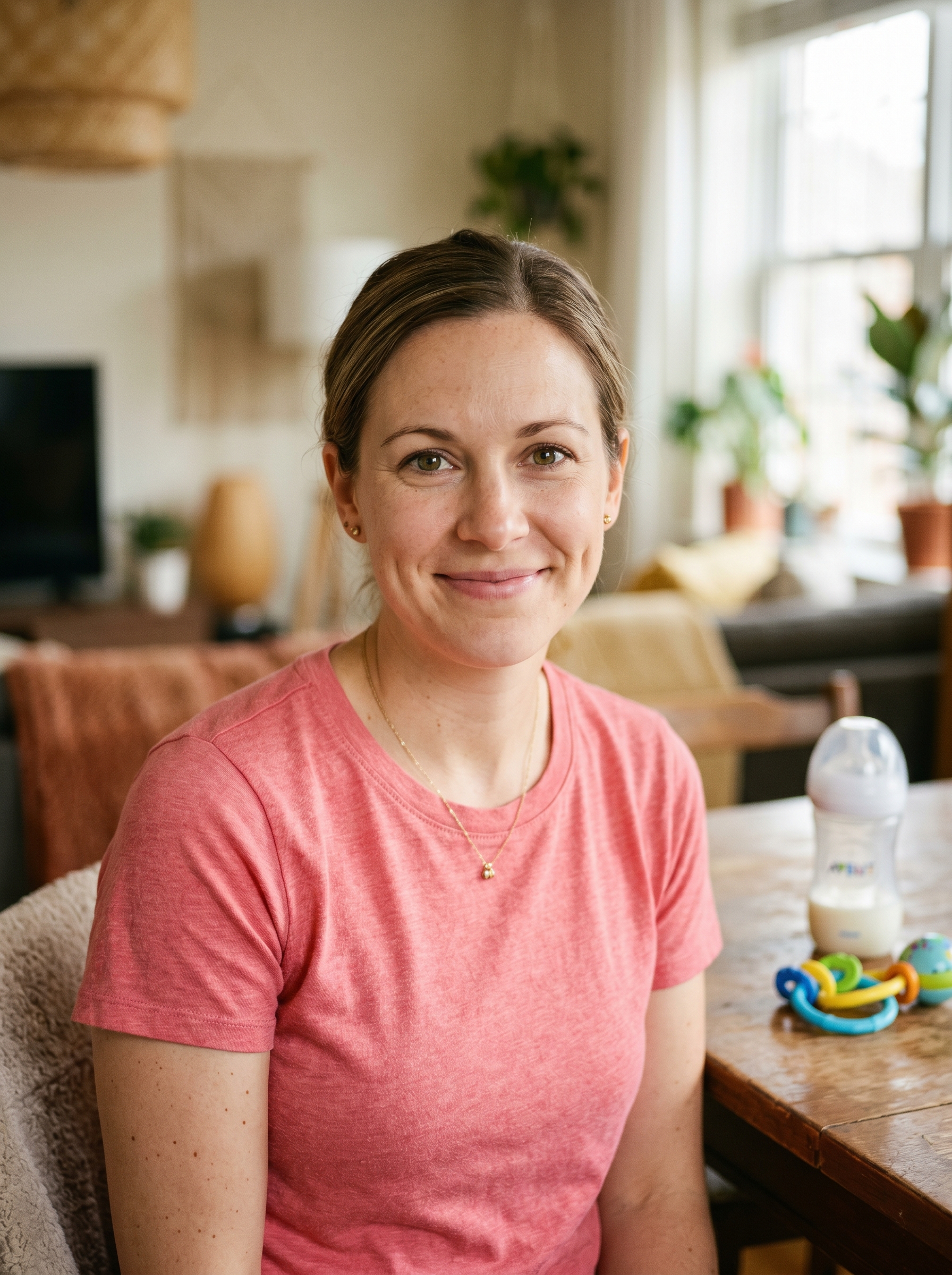
I'm not a fitness influencer. I'm not a doctor. I'm not one of those "snapped back in 6 weeks" Instagram moms who makes the rest of us feel terrible about ourselves.
I'm a regular mom — formerly based in Austin, Texas, now traveling the world doing humanitarian work. My friends and colleagues across Africa actually gave me the nickname Adaeze during my trips there, meaning "daughter of a king" — and honestly, after what I discovered, it's a name I wear proudly.
I had my baby 3 months after one of my stints abroad. And for those first 3 months back home, I felt like a stranger in my own body.
My belly looked like I was still 5 months pregnant. I was so exhausted I once fell asleep sitting upright at my desk. My lower back pain was so bad I moved like I'd aged 20 years overnight.
Everyone kept saying the same thing: "Oh, your body will bounce back. Give it time."
Time? I had given it time. 3 months of time. And my body wasn't bouncing back — it was settling into this new, uncomfortable, unrecognizable version of itself.
I tried everything. The waist trainer. The clean eating plan. The daily walks. The postpartum supplements. Nothing touched the belly.
Then one afternoon, I caught up with my colleague Dr. Sarah — a women's health physiotherapist — over coffee.
I mentioned my belly. She put her cup down and looked at me seriously.
"Emily. I need to tell you something that your OB should have told you months ago."
What she said over the next hour changed everything I thought I knew about my postpartum body.
Dr. Sarah leaned forward and said something that stopped me cold:
"Emily, the reason your belly isn't going down has nothing to do with body fat. It's a condition called diastasis recti. During pregnancy, your abdominal muscles — the ones that hold your core flat and strong — literally separate down the middle to make room for the baby. In over 60% of women, those muscles never close back together after delivery. That gap is why you have a pouch. No amount of dieting, waist training, or cardio will fix it — because it's not a fat problem. It's a structural muscle gap. And until that gap closes, the belly stays."
I stared at her.
"A gap? In my actual muscles?"
"Yes. Here — let me show you how to check." She guided me through a simple self-test. Two fingers pressing gently above my navel while doing a tiny crunch. If I could feel a gap wider than 2 finger-widths, I had diastasis recti.
I did the test right there at the coffee shop table.
I could fit 3 fingers in the gap.
Three. Fingers.
That was why my belly pouched forward no matter what I did. My abdominal muscles had separated during pregnancy and simply hadn't come back together. There was a literal gap running down the center of my core — and my organs were pressing through it, creating that stubborn rounded belly.
And here's the part that genuinely made me angry:
Not one doctor, nurse, midwife, or OB had mentioned this to me. Not during pregnancy. Not in the hospital after delivery. Not at my 6-week postpartum checkup.
And the things I'd been doing to fix it? They were actually making it worse.
Sit-ups and crunches? They generate pressure that pushes the two sides of the gap further apart — literally widening the separation with every rep.
Waist trainers? They compress the gap from the outside while doing absolutely nothing to close it from the inside — and they weaken the surrounding muscles further.
Dieting? I was losing fat from everywhere else — but the belly wasn't fat. It was organs pushing through a muscular gap that no calorie deficit can fix.
Everything I had tried was either useless or actively making the problem worse. Because nobody had told me what was actually wrong.
Dr. Sarah had a specific protocol — gentle, targeted movements designed to reactivate the deep core muscles and progressively close the gap. Not crunches. Not planks. Not anything I'd seen in a postpartum workout video. Ten minutes a day. On the floor of your bedroom. No equipment needed.
"The research is clear," she said. "Even if you start 12 or 18 months postpartum, the muscles still respond. The gap can still close. Your body hasn't given up on you — it just hasn't been given the right signal yet."
She sent me the full programme that evening.
I started the next morning.
The results weren't instant. But they were real — and they were measurable.
Week 1: The exercises felt almost too gentle. Tiny, subtle movements — nothing like what I thought "working out" meant. But by Day 4, I noticed something: the lower back pain that had been my constant companion since delivery was noticeably better. The exercises were waking up deep core muscles that had gone dormant during pregnancy.
Week 2: I did the finger test again. My 3-finger gap had become 2.5 fingers. The gap was measurably closing. My belly didn't look dramatically different yet — but something was clearly happening underneath. My energy improved. I was actually making it through the afternoon without hitting a wall.
Week 3: The belly started to change shape. Not flat yet — but the soft, rounded pouch was firming up, pulling inward. I could see the outline of where my muscles were reconnecting underneath. My partner noticed before I did. "Hey — something looks different. What have you been doing?"
Week 4: Finger test: 1.5 fingers. Down from 3. Nearly closed. My belly was visibly, genuinely flatter. I pulled out jeans I hadn't worn since before pregnancy. They zipped. I wore them out to dinner that Saturday. I stood in front of the mirror that evening — and for the first time in four months — I recognized the woman looking back at me.
I shared the programme with my friend Jessica — 8 months postpartum, two kids, same frustrated story. She had visible results by Week 2.
Then my neighbor Laura tried it — 14 months postpartum and completely resigned to her new body. Her gap closed from 4 fingers to 1.5 in just 5 weeks.
Then women from my mommy group started asking what I'd done differently.
Over the past several months, more than 150 mothers around the world have followed this programme — from the US to the UK, Canada to Australia, and across Africa and Europe. The pattern is consistent: back pain reduces in Week 1, the gap starts closing in Week 2, visible belly change by Week 3, and most women fit back into pre-pregnancy clothes by Week 4–6.
I put the entire system — the self-test, the 28-day programme, the progression levels, the meal guide, all of it — into one comprehensive guide that any mom can follow from home.
Introducing…
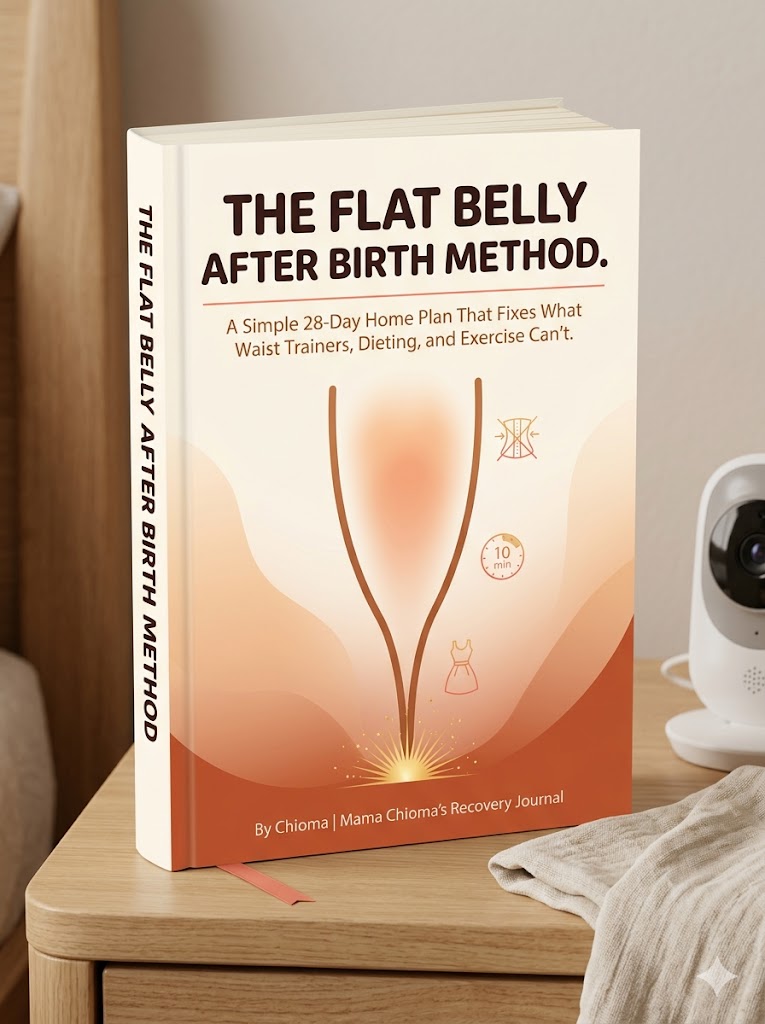
The Flat Belly After Birth Method
A Simple 28-Day Home Plan That Fixes What Waist Trainers, Dieting, and Exercise Can't — The Hidden Reason Your Post-Baby Belly Won't Go Away (And How to Reverse It Naturally)
This is not a weight loss programme. This is not a diet plan. This is not "eat less, move more."
This is a core rehabilitation protocol — specifically designed for postpartum mothers — that closes the muscle gap causing your belly pouch, rebuilds your deep core strength, and restores your body from the inside out.
Ten minutes a day. In your bedroom. While the baby sleeps. No gym membership. No babysitter required. No one else needs to know.
Inside this guide, you'll discover:
- The Diastasis Recti Self-Test — a 30-second check you can do right now to find out if your abdominal muscles separated during pregnancy (over 60% of moms have this and have no idea) — Pg. 5
- Why sit-ups, crunches, and waist trainers are making your postpartum belly WORSE — and the physiology behind what's actually happening inside your core — Pg. 9
- The 28-Day Core Reconnection Programme — a progressive, day-by-day plan that starts gently and builds real strength safely. Each week targets a deeper layer of your core — Pg. 14
- Weekly "Gap Check" measurements on Day 7, 14, 21, and 28 — so you can track your gap closing in real time. Watching the number drop from 3 fingers to 1 is the most motivating thing you'll experience — Pg. 22
- The Breastfeeding-Safe Nutrition Guide — what to eat to support milk production AND core recovery, without restrictive dieting — Pg. 26
- The Lower Back Pain Protocol — 3 specific stretches that address the back pain caused by a weak postpartum core. Most moms feel relief within the first 3 days — Pg. 30
- The Pelvic Floor Fix — how to stop stress urinary incontinence (the leaking when you sneeze, cough, or lift) — typically resolved within the first 7–10 days — Pg. 33
- When to seek professional help — 4 specific warning signs that indicate your situation needs medical attention beyond exercise — Pg. 36
And the best part?
Every exercise can be done on your bed, a yoga mat, or your bedroom floor. No gym. No equipment. No childcare needed. Just you, 10 minutes a day, and a plan that was designed to work for your actual postpartum body.
Real Moms. Real Results. From Around the World.
Jessica M.
Sophie B.
Lauren R.
Mia K.
Camila R.
Share Your Experience
Let's Talk About What This Is Actually Worth…
Think about what you've already spent trying to fix your postpartum belly:
- Waist trainers and belly wraps — compresses the gap from outside, fixes nothing from within
- Postpartum detox teas and supplements — zero effect on separated muscle tissue
- Gym memberships and group fitness classes — generic programmes not designed for diastasis recti
- Women's health physiotherapy — $80–$150 per session, months-long waiting lists
- The emotional cost of not recognizing your own body? That one's priceless.
This programme delivers the same principles as professional postnatal physiotherapy — in a simple, guided, at-home format. At a fraction of the cost.
I could charge $44.99 for this. And it would still be less than a single physio session.
The complete Flat Belly After Birth Method — the 28-day programme, nutrition guide, self-tests, back pain protocol, pelvic floor fix, and all bonuses — is yours today for just…
Introductory Launch Price — First 50 Moms Only
Price returns to $44.99 after the first 50 copies. No exceptions.
Once you click the button above, you'll be taken to a secure checkout page.
✅ Pay securely with your credit card, debit card, or PayPal
✅ After payment, you receive instant digital access to the full guide and all bonuses
✅ Works on your phone, tablet, or laptop — no app required
No waiting. You'll be reading within 2 minutes of purchase.
You Also Get These 2 FREE Bonuses…
When you get The Flat Belly After Birth Method today, these 2 bonus resources are included at no extra charge:
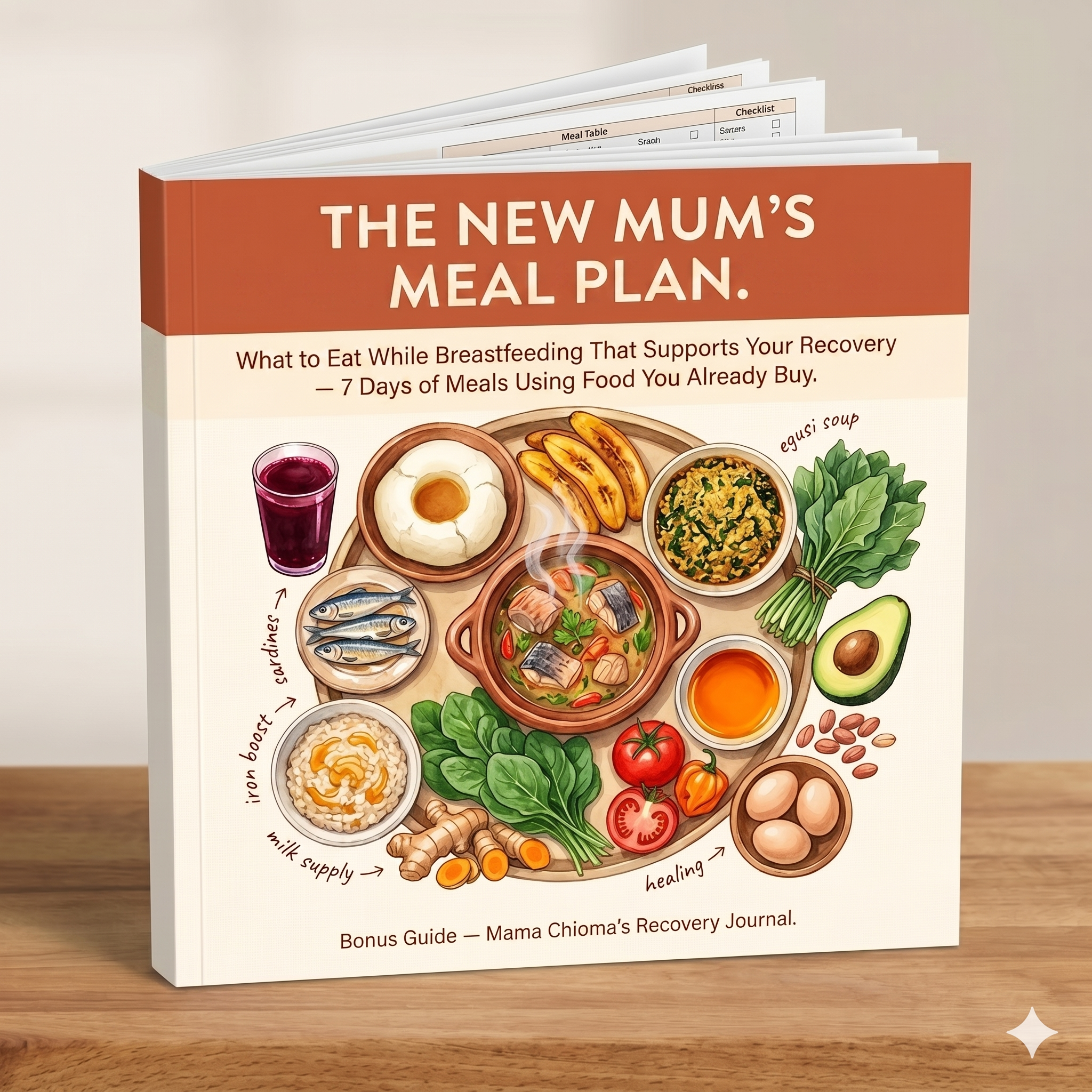
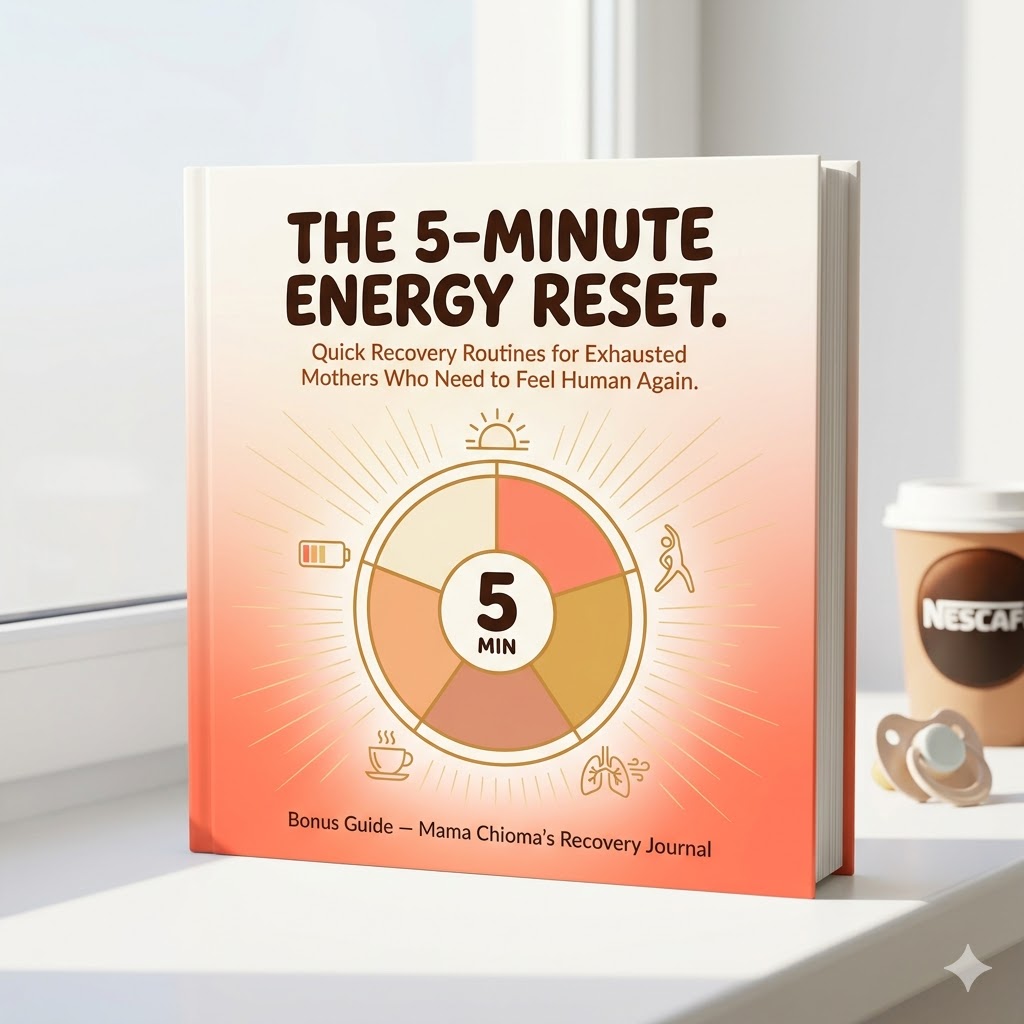
NOTE: When I shared this in our private new moms' group, women from around the world joined within hours.
Belly Gap Fix — Moms Group
16 members
And more moms are joining every single day — from the US, UK, Canada, Australia, Europe, and beyond.
The introductory price of $22.49 will not last.
Once the first 50 spots are claimed, the price returns to $44.99.
The complete programme + 2 bonus guides for just $22.49 instead of $44.99
Still on the fence?
28-Day Results-Or-Full Refund Guarantee
Get the programme today. Follow the 28-day plan — do the exercises, follow the nutrition guide, measure your gap weekly.
If after 28 days of following the programme you haven't seen measurable improvement in your belly, your back pain, or your energy — contact me directly and I will refund you in full. No forms. No hassle. No questions asked.
You either see real results, or you pay nothing. That's my promise.
Right Now, You Have 2 Choices:
- Take action today. Get The Flat Belly After Birth Method. Do the self-test tonight. Start the programme tomorrow morning. Watch your gap close week by week. Feel your back pain disappear. See your belly flatten and your core strengthen. Zip up clothes you haven't worn since before pregnancy. Look in the mirror and recognize yourself again.
OR
- Close this page. Buy another waist trainer. Try another detox tea. Sign up for a fitness class where no one checks whether you have diastasis recti first. Avoid mirrors. Avoid photos. Keep wearing the oversized top. And 6 months from now, the belly will still be there — because you still won't know about the gap that's causing it.
Your postpartum belly is not about willpower or laziness. It's a muscle gap. You know that now.
The only question is: what will you do about it?
More Moms Around the World Are Seeing Results…
Amanda H.
Katrina P.
Nathalie V.
Tanya R.
The Flat Belly After Birth Method © 2026. All Rights Reserved.
Disclaimer: This guide provides general wellness and postnatal recovery information based on personal experience and publicly available physiotherapy research. It is not a substitute for professional medical advice. Consult your healthcare provider before beginning any exercise programme, especially following childbirth or cesarean section. Individual results may vary.
Jessica M. from Houston, USA
just joined The Flat Belly After Birth Method
3 minutes ago